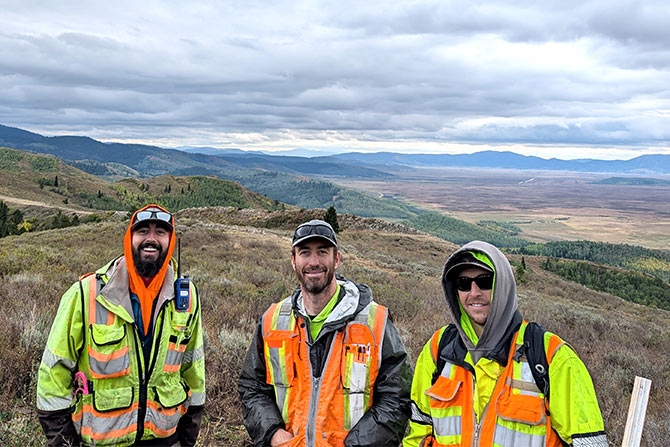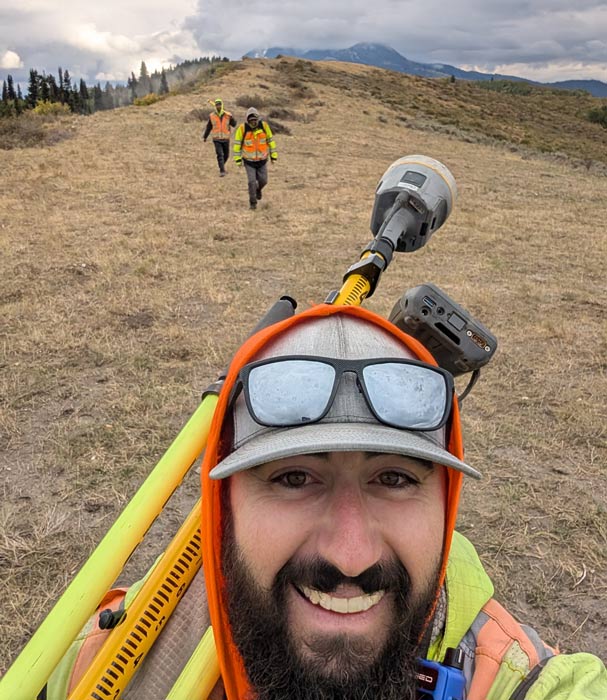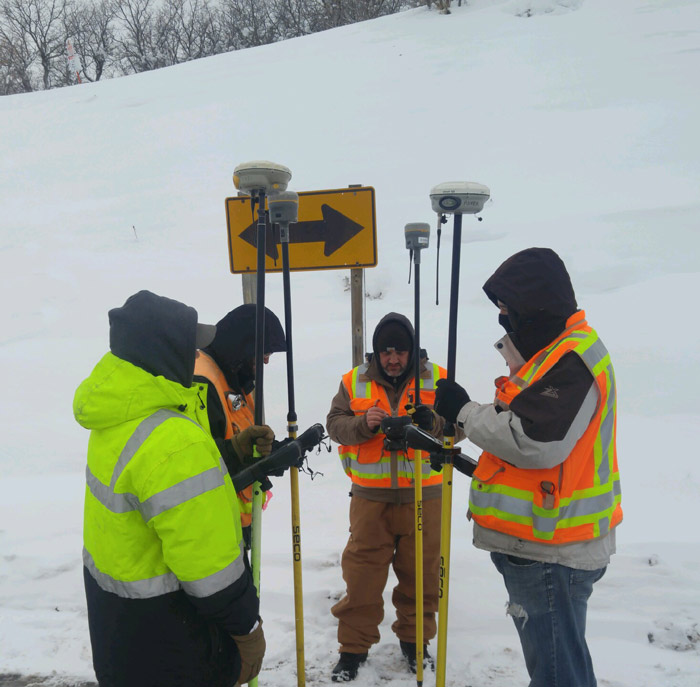



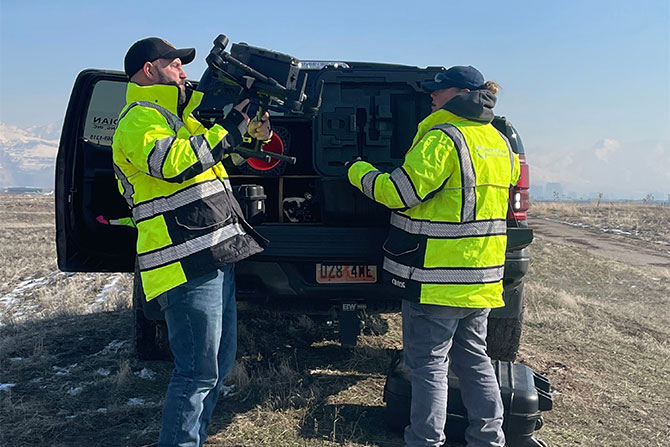

In the wake of the Great Recession and the 2008 housing crisis, the surveying industry across the United States changed almost overnight. Faced with economic uncertainty and shrinking budgets, many firms — including my own — shifted from traditional two-person field crews to solo operators equipped with GPS receivers and robotic total stations. The logic was simple: one person, one vehicle and a smaller payroll.
It worked — at least on paper. In hindsight, that cost-cutting pivot came at an enormous price. It weakened one of the most critical foundations of our profession: mentorship. And if we’re honest, it also eroded safety, quality and the pipeline of future surveyors along the way.
Safety Is Not Optional
Surveying is a boots-on-the-ground profession. Our work takes us to the center of busy roadways, active construction sites and remote terrain. It’s not work designed for solitude.
Ask yourself: How safely can a single operator set up on a control monument in the middle of a live roadway, open and clean a monument well, occupy it for a sufficient duration and close it up — all while dodging traffic and watching their back? The honest answer is that they can’t do it safely — not consistently.
A second crew member isn’t just helpful; they are a safety lifeline. They provide traffic spotting, equipment handling and situational awareness. They prevent incidents before they happen. No data point or deadline is worth a life, and when it comes to field safety, redundancy saves lives.
Mentorship Is How Our Profession Survives
Most of us didn’t grow up dreaming of being surveyors. We stumbled into it — fresh out of high school, pounding hubs, clearing brush or chasing section corners in the mountains — and fell in love with the work because someone saw something in us.
When we exclusively work in one-person crews, we remove that first rung of the ladder. There’s no seasoned crew chief to show the ropes, explain boundary evidence or model professional field practices. There’s no on-the-job apprenticeship, which is how most of us learned.
At Meridian Engineering, we’ve returned to the two-person crew model not just for productivity, but as a deliberate workforce development strategy. We hire young technicians right out of high school at $20 per hour, pair them with experienced chiefs and let them get their hands dirty. At the six-month mark, we evaluate: Is there a spark? Do they have the aptitude? If yes, we raise their pay to $22 per hour and offer to cover half of their tuition to pursue formal surveying education. This simple approach has produced loyal, skilled crew members — and future leaders of our company.
Professionalism Has a Price Tag
Let’s be candid: We are in business to make money. But if we continue charging $120-150 per hour for a solo crew, while cutting out mentorship and safety to make the margins work, we’re undercutting the profession itself.
We are not a trade — we are a profession. Professionals invest in training, safety and the future, and that value deserves to be reflected in our billing. Two-person crews justify a higher rate, and clients will pay it when we confidently present the value. Establish a standard crew rate in the $200-250 per hour range (Note: The hourly wages and crew rates referenced in this article reflect current economic conditions along Utah’s Wasatch Front, which may differ from other regions.)
More importantly, stop offering a “one-man versus two-man” pricing choice. Set one professional crew rate and stick to it. Ironically, on days when you only send one person, you’ll enjoy the extra margin. On all other days, you’ll be funding safety, the long-term growth of your company and the profession as a whole.
Raising the Bar — Together
The nationwide shortage of surveyors is no secret. Universities are graduating too few, licensing boards are watching the pipeline shrink and firms are scrambling for qualified crew chiefs. The solution isn’t simply recruiting more people — it’s building them.
Business owners, this starts with us. Bringing back two-person crews is about more than doubling headcount. It’s about restoring the safety, mentorship and professionalism that make our field sustainable. Someone once took us under their wing. Now it’s our turn.
Let’s raise the bar — together.
Michael Nadeau is the president of Meridian Engineering, a full-service surveying and civil engineering firm based in the Salt Lake City metropolitan area. He leads Meridian with a strong focus on mentorship, innovation and community-building. Michael is passionate about cultivating the next generation of surveyors and actively promotes hands-on training and workforce development within the profession.
Tips for Transitioning Back to Two-Person Survey Crews
Practical Steps from Meridian Engineering’s Approach
1. Start with Entry-Level Hires
Bring on young, motivated candidates at an accessible starting wage (e.g., $20/hour). Look for work ethic and curiosity over technical experience.
2. Pair Them with Strong Mentors
Assign each new hire to a seasoned crew chief. Make mentoring part of the chief’s job description — this is not just extra labor, it’s professional development.
3. Use a Six-Month Evaluation Window
At six months, sit down and assess:
- Do they like the work?
- Are they showing aptitude and growth?
- If so, reward them with a raise (e.g., to $22/hour) and offer partial tuition support for surveying coursework.
4. Establish a Standard “Crew Rate”
Eliminate price choices and adopt a single professional crew rate that supports two-person staffing (typically $200-250/hour, depending on your market).
5. Educate Your Clients on the Value
When clients ask about cost, emphasize:
- Safer construction sites and roadways
- Higher quality data collection
- Faster turnaround through teamwork
- Better for the future of the profession
6. Celebrate Internal Success Stories
Show your team (and your clients) that you are developing tomorrow’s crew chiefs in-house to build loyalty, reputation and recruiting momentum.